Kia Sonet has was finally unveiled at the Global web launch which was hosted by Angad Bedi. The car has entered the segment, which is currently dominated by the Hyundai Venue and the Maruti Suzuki Vitara Brezza. Well time will only tell, if the car will make it or not and if the iMT and smart connectivity features will make it distinctive from others.
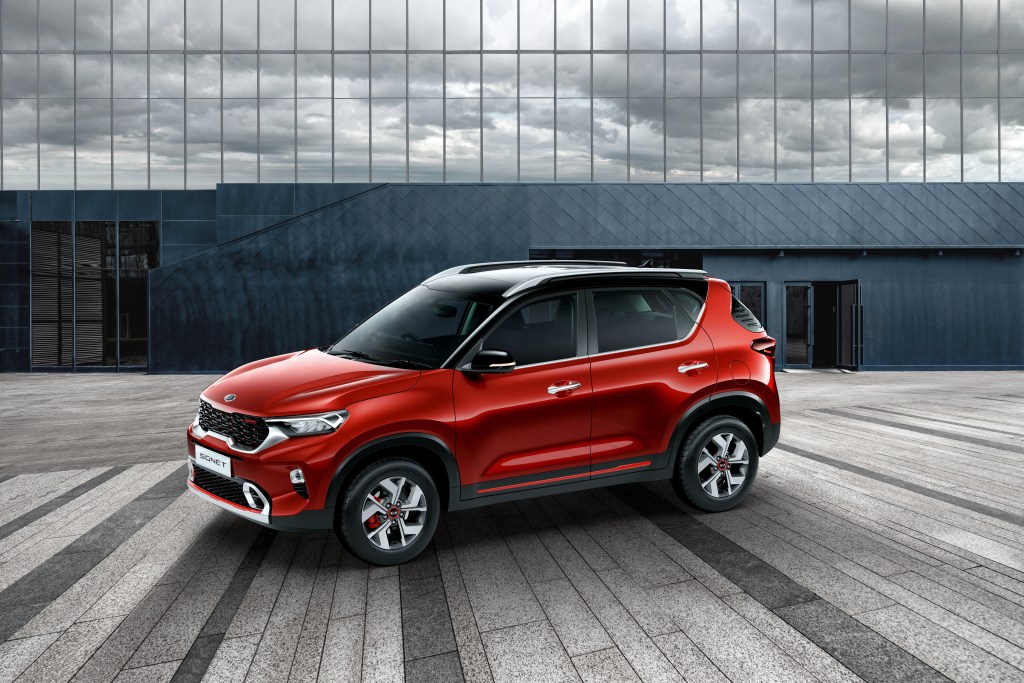
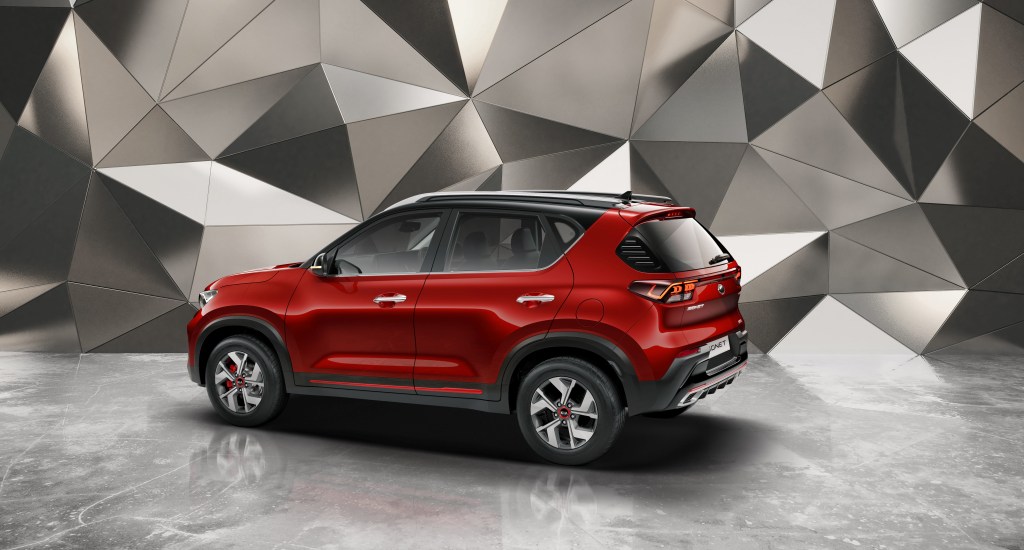
From the looks of it, we can definitely see what the hype was all about. It was marketed as the car which is ‘Made in India, For India’ and it sure looks like it. It looks absolutely stunning with the LEDs being the main distinctive feature as they run along the front and the back in a unique manner. But the back of the car is a little questionable and certainly not everyone’s cup of tea. So definitely that would be cause of some ‘interesting’ conversations among the petrol-heads and the of course the buyers. But apart from that, the new design and segment-first features of the car certainly helps it stand out from the others.
Karim Habib, Vice President and Head of Global Design said that the Sonet was inspired by India. It is made in India for India and will be globally exported from India only. He revealed that Sonet’s design was largely influenced by the dynamic Indian culture and architecture. The Chand Baori inspired Tiger nose grille at the front shows how much Kia loves India. The design team was also moved by the baby elephant, which is why the powerful stance, the large bumper, and the hood are so forceful. The sunroof, its lively silhouette, volume over the wheel arches, the tiger eyeline headlamps, all of these features speak volumes on how much the car is a locally inspired global product. The rear of the car is wider, wider than the other cars in the segment and the broad heartbeat LED tail-lamps makes it look even wider.
The Sonet was also called the wild and untamable beast with a sophisticated and elegant design. It is made for the people who are young at their heart and are open to new adventures. The interiors are natural but yet have an emotional connection with the digital aspect. The highlight of the cabin is the enormous 10.5-inch touchscreen navigation system, which is equipped with UVO Connected technology. The double-layered vertical air vents and the ventilated seats ensure that the car remains cool and comfortable in hot temperatures of India. There is also a segment-first air purifier in the car which actually is very important taking into consideration today’s circumstances.
The car is also equipped with an intelligent manual transmission gearbox. This means that there will be no clutch in the car and still the driver would get total control of the car, as the gear is his own hand. This feature is also seen in the Hyundai venue. The car is also equipped with Bose sound system, which means that the sound system of the car would be absolutely wonderful. The Kia Sonet will come with a 1.2-liter N/A petrol, a 1.0-litre turbo petrol, and a 1.5 diesel engine. It will also be the only SUV that will offer a diesel automatic variant. The GT line variant will be sportier and more powerful as compared to the other variants and will be available with the turbo-petrol and diesel.
From the looks of it, we can definitely see what the hype was all about. It was marketed as the car which is ‘Made in India, For India’ and it sure looks like it. It looks absolutely stunning with the LEDs being the main distinctive feature as they run along the front and the back in a unique manner. But the back of the car is a little questionable and certainly not everyone’s cup of tea. So definitely that would be cause of some ‘interesting’ conversations among the petrol-heads and the of course the buyers. But apart from that, the new design and segment-first features of the car certainly helps it stand out from the others.
Karim Habib, Vice President and Head of Global Design said that the Sonet was inspired by India. It is made in India for India and will be globally exported from India only. He revealed that Sonet’s design was largely influenced by the dynamic Indian culture and architecture. The Chand Baori inspired Tiger nose grille at the front shows how much Kia loves India. The design team was also moved by the baby elephant, which is why the powerful stance, the large bumper, and the hood are so forceful. The sunroof, its lively silhouette, volume over the wheel arches, the tiger eyeline headlamps, all of these features speak volumes on how much the car is a locally inspired global product. The rear of the car is wider, wider than the other cars in the segment and the broad heartbeat LED tail-lamps makes it look even wider.
The Sonet was also called the wild and untamable beast with a sophisticated and elegant design. It is made for the people who are young at their heart and are open to new adventures. The interiors are natural but yet have an emotional connection with the digital aspect. The highlight of the cabin is the enormous 10.5-inch touchscreen navigation system, which is equipped with UVO Connected technology. The double-layered vertical air vents and the ventilated seats ensure that the car remains cool and comfortable in hot temperatures of India. There is also a segment-first air purifier in the car which actually is very important taking into consideration today’s circumstances.
The car is also equipped with an intelligent manual transmission gearbox. This means that there will be no clutch in the car and still the driver would get total control of the car, as the gear is his own hand. This feature is also seen in the Hyundai venue. The car is also equipped with Bose sound system, which means that the sound system of the car would be absolutely wonderful. The Kia Sonet will come with a 1.2-liter N/A petrol, a 1.0-litre turbo petrol, and a 1.5 diesel engine. It will also be the only SUV that will offer a diesel automatic variant. The GT line variant will be sportier and more powerful as compared to the other variants and will be available with the turbo-petrol and diesel.
 motiveauto.car.blog